Brazil is voting in a runoff between President Luiz Inácio Lula da Silva and Flávio Bolsonaro, and HuffPost describes the race as razor-close. Close races produce fast, noisy information, and plenty of it will be wrong. This guide gives you a simple setup on your phone or computer to follow the count reliably and to spot misleading claims before you share them.
Why this race will be noisy
Per HuffPost's reporting, the runoff is polarizing. Voters are divided over crime, cost of living, climate, democracy, the judiciary, and relations with the United States. HuffPost also frames the result as a test of whether Latin America's largest economy moves rightward alongside Trump-aligned regional leaders or keeps a left-of-center axis with Mexico.
That is a lot of emotion and a lot of stakes. My take: when stakes are high and margins are thin, screenshots, clipped videos, and "it's already decided" posts spread faster than careful reporting. Your best defense is a routine, not a hunch.
Step 1: Set up a short list of trusted sources
On any phone (iPhone with iOS 17 or later, or Android 13 or later) or any desktop browser:
- Pick two or three established news outlets that report in different styles, such as a wire service, a major newspaper, and a broadcaster. Include at least one that covers Brazil directly.
- Bookmark their election pages in your browser. On iPhone, tap the Share icon and choose Add Bookmark. On Android Chrome, tap the three-dot menu and the star icon.
- Turn on push alerts in their apps for breaking news only, not every story. This keeps your phone quiet until something real happens.
If an outlet you don't recognize is the only one reporting a dramatic claim, wait.
Step 2: Learn the difference between a projection and a final count
Election nights often have three stages: early partial counts, news projections, and official results. Early numbers can swing as different regions report, so a lead at the start may not hold. In a race described as razor-close, treat any single snapshot as provisional.
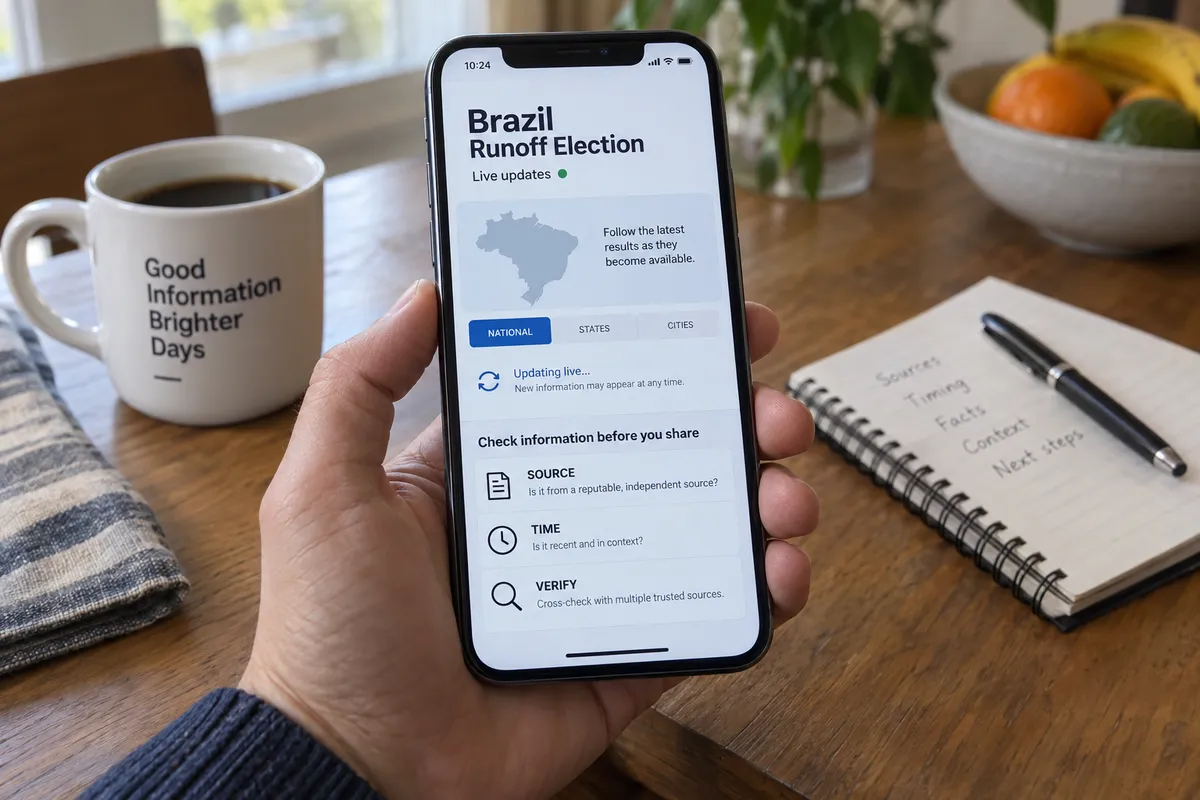
A practical rule: don't share a result until at least two of your trusted sources say the same thing, and look for wording like "projected" versus "certified."
Step 3: Check any viral post in 60 seconds
When a post claims fraud, a surprise result, or a shocking statement from a candidate, run this quick check:
- Look at who posted it. Is it a new account, an anonymous account, or one with a history of sensational posts?
- Search the claim. Paste a distinctive phrase into your search engine with the word "fact check." If it's real and important, established outlets will cover it.
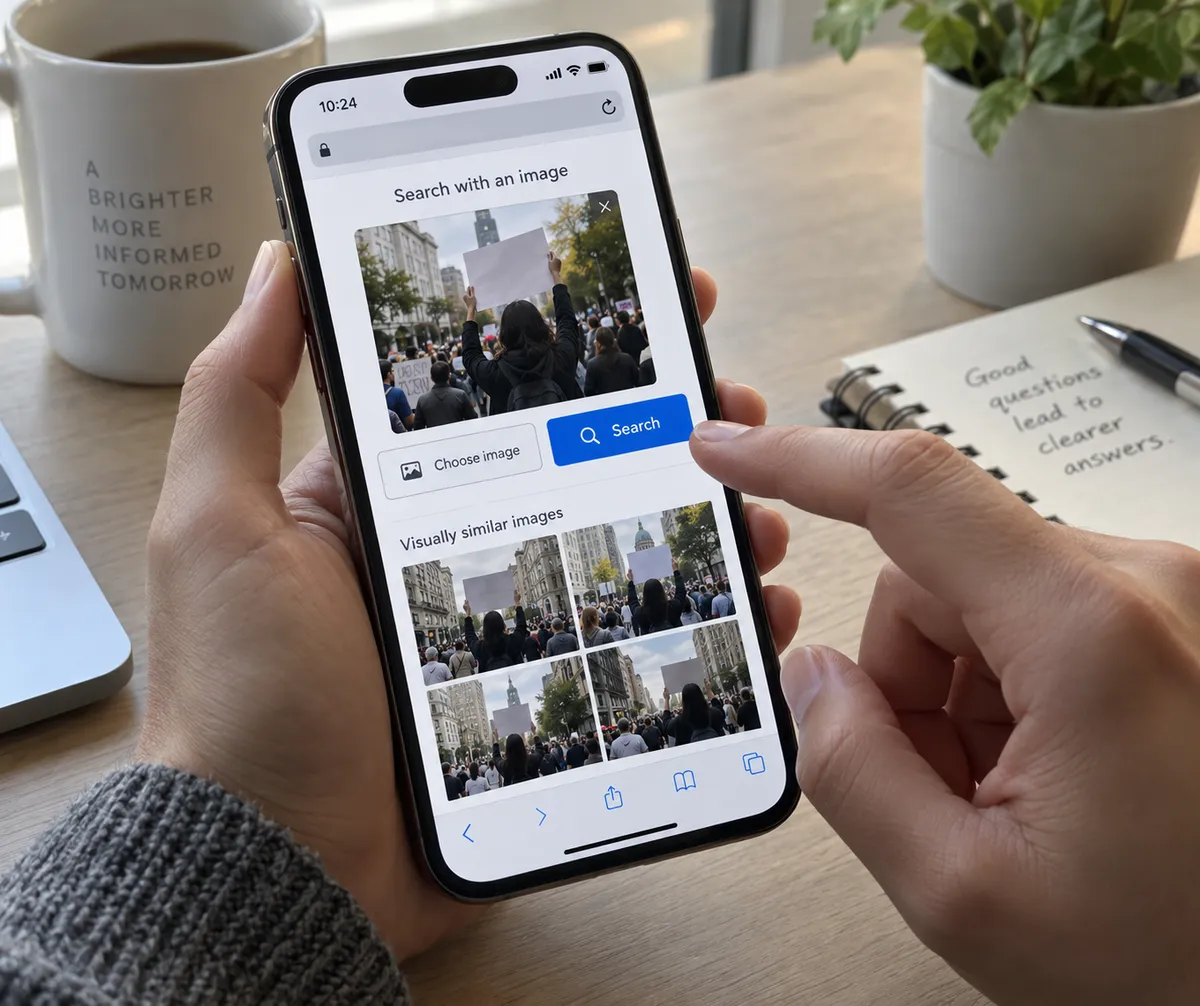
- Reverse-search the image. In Chrome, right-click an image and choose Search image with Google. On a phone, press and hold the image. Old photos get recycled constantly during elections.
- Check the date. Videos from earlier events often resurface as "breaking."
- Look for the full clip. A short cut of a speech can reverse the speaker's meaning.
If you can't verify it in a minute, don't repost it.
Step 4: Translate with care
Much of the primary coverage will be in Portuguese. Use the built-in translation in Chrome (right-click and choose Translate to English) or Safari on iPhone (tap the page settings icon, then Translate). Machine translation is good for the gist, but it can flatten nuance. For direct quotes from candidates, prefer outlets that publish their own translation, and be cautious about quotes you can only find in screenshots.
Step 5: Know the big themes so headlines make sense
HuffPost reports that the runoff touches several issues beyond Brazil's borders, including rising U.S. involvement in Latin America, tariff pressure, and competition over rare minerals. It also points to concerns over democratic institutions, and to what's at stake in crime policy and Supreme Court appointments.
You don't need to be an expert, but knowing these themes helps you spot when a post is twisting a real issue into a false claim. For example, a post that ties the vote to a single dramatic outcome, such as "this will instantly change global prices," is overselling. HuffPost says the result could reshape regional power dynamics, but that's a framing about influence, not a guarantee of any immediate effect.
Step 6: Protect your accounts while you scroll
Election periods also bring phishing. Be wary of messages with "official results" links, donation requests, or "verify your vote" prompts.
- Don't tap links in unexpected texts or direct messages. Go to the site yourself.
- Turn on two-factor authentication for your email and social accounts.
- Keep your phone's operating system and browser updated, since updates patch known security holes.
Step 7: Take the night in small doses
Refreshing feeds for hours makes you more likely to believe whatever appears next. Try checking at set times, say when polls close and again the next morning, with your alerts handling anything urgent. Both iOS Focus and Android Do Not Disturb let you allow only your news apps to break through.
The one habit that matters
Before you share anything about Brazil's runoff, wait for two trusted sources to confirm it. That single pause does more against misinformation than any app.