A fake celebrity account can now send you video messages that look and sound real. By the end of this guide, you'll have a short checklist for spotting a fake celebrity DM, a few steps to run before you ever send money, and a way to talk with someone you worry about without making them feel foolish.
What happened to Leslie Pickett
Per Fox News, Leslie Pickett, a Louisiana woman, lost more than $10,000 to an impersonator posing as Jon Bon Jovi on Instagram. The scam reportedly ran for months. It used messages, AI-generated videos, and payments for fake meet-and-greet access, and it nearly cost her her home.
The story is also featured in National Geographic's "Super Scam Me," which, per the coverage, looks at how romance scammers use emotional manipulation and generative AI.
The details matter less than the pattern. Nothing about it required Pickett to be careless. It required time, attention, and a convincing face on screen.
Why smart people still fall for this
These scams rarely start with a request for money. They start with friendly contact, then build trust over weeks or months. By the time a payment request arrives, the person on the other end feels familiar, and walking away feels like losing a relationship.
AI video makes that step easier for scammers. A short clip of a recognizable face saying your name can feel like proof. That's why "I'd never fall for that" is the wrong mindset. A better one: assume any video can be faked, and rely on checks that don't depend on how real something looks.
Red flags that a celebrity DM is fake
Treat any of these as a reason to stop and verify.
The contact is unsolicited
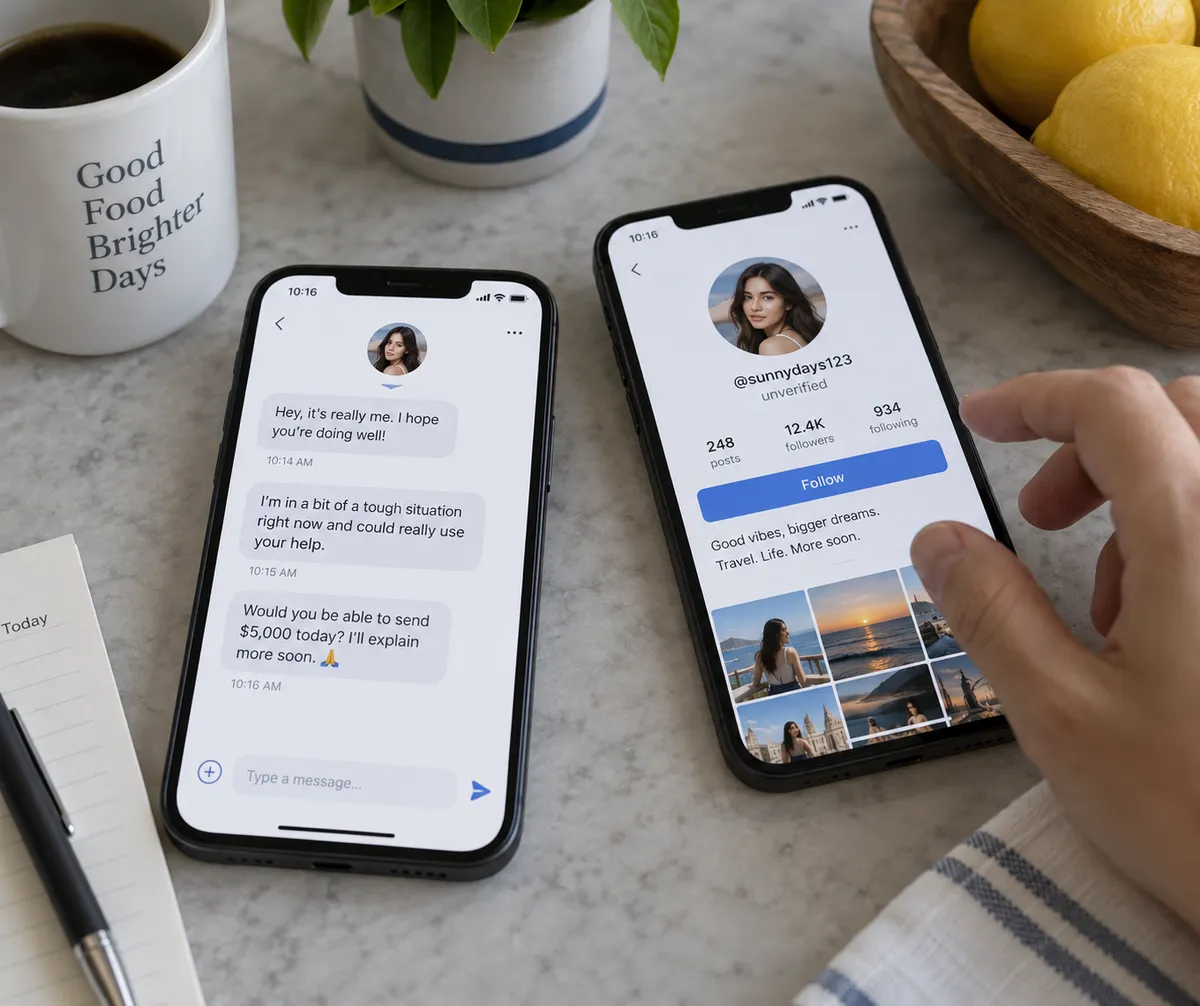
Famous people don't privately message fans to start a friendship. If a star reaches out first, assume it's an impersonator until proven otherwise.
The account isn't verified, or looks off
On Instagram, open the profile and look at the account name, follower count, post history, and whether it has a verification badge. Be aware that badges alone aren't a perfect guarantee, and copycat accounts often use near-identical usernames with an extra letter, underscore, or number. Compare the handle to the one linked from the celebrity's official website.
The relationship moves fast and stays private
Scammers push you toward intimacy and secrecy: "Don't tell anyone," or moving you to another chat app. Isolation is a tactic, because friends and family would spot the problem.
Money enters the picture
Any request for money from someone you've never met in person is a stop sign. In Pickett's case, the payments were framed as fees for meet-and-greet access. Real celebrity meet-and-greets are sold through official channels, not through private messages.
The payment method is unusual
Be wary of requests for crypto, gift cards, wire transfers, or payment apps. These are hard to reverse. If someone tells you how to pay and discourages questions, that's the warning.
The video is personal but generic
A clip that says your name but dodges specifics, or can't answer a question you didn't expect, should worry you. Real people can respond to the unplanned.
A five-step check before you reply or pay
These work on any phone or computer, with the Instagram app or any other messaging app.
- Pause. Don't respond to urgency. Scammers want fast decisions; a real opportunity survives a day of waiting.
- Check the source. Go to the celebrity's official website or verified social profiles and see whether they list their accounts. If the DM account isn't there, it's not them.
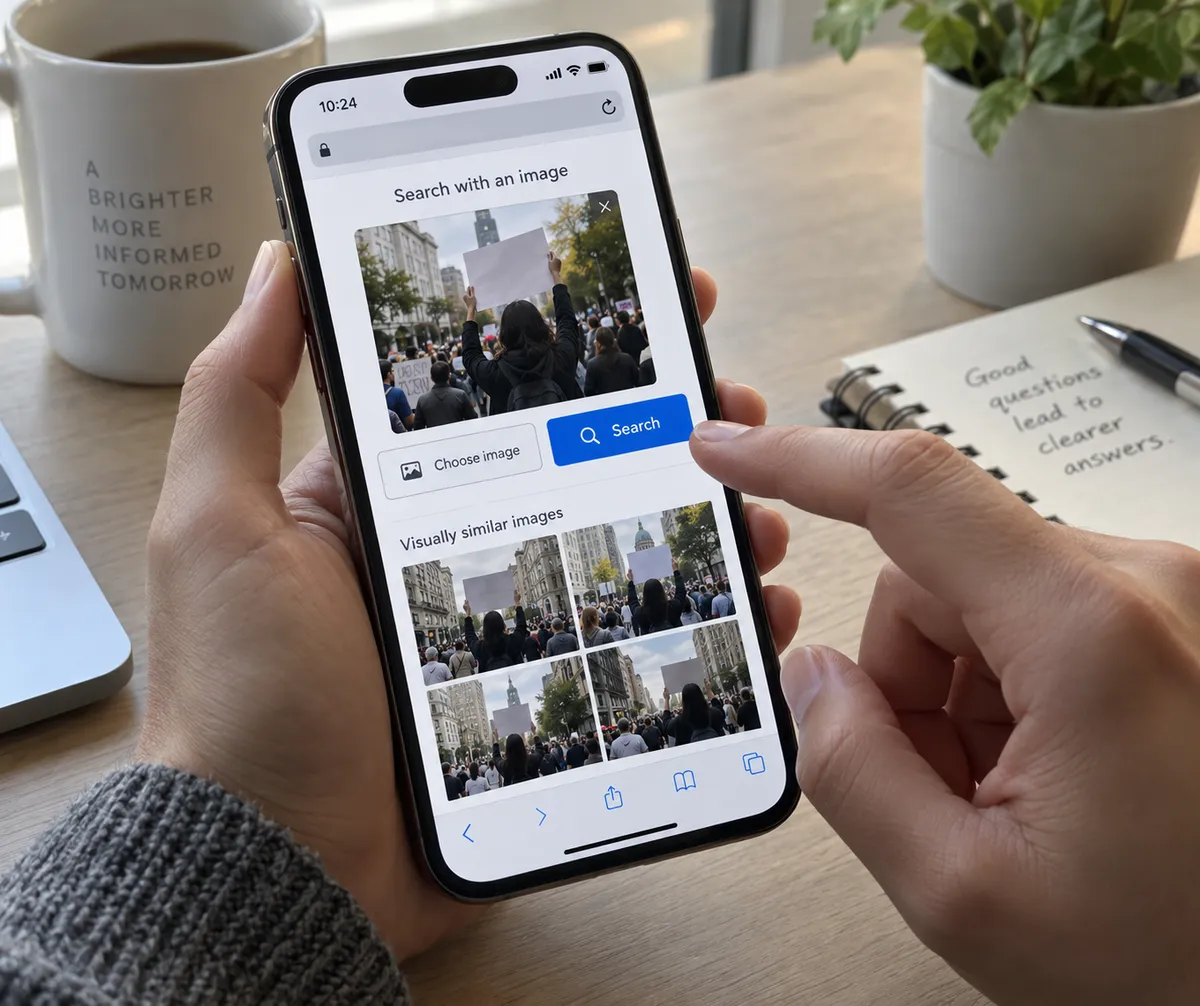
- Run a reverse image search. Save a profile photo or screenshot, then search it with Google Lens or a similar tool. Reused photos from other accounts are a giveaway.
- Ask a question only the real person could handle. Better still, ask for a live video call where you pick the topic. Be cautious even then, since live deepfakes exist, but evasion is telling.
- Tell someone. Show the messages to a friend or relative. An outside view breaks the spell quickly.
If you've already sent money, stop all further payments, contact your bank or payment provider right away, and report the account to the platform. Don't pay "recovery fees" to anyone who promises to get your money back.
Deepfake videos aren't easy to spot anymore
You may have heard to look for odd blinking or warped hands. Don't count on it. Per the coverage of this story, AI tools are making celebrity impersonation much more convincing, so the safest approach is not to judge by visuals alone. Judge by behavior: who contacted whom, what's being asked, and how you're being asked to pay.
How to talk to someone who may be caught in a scam
If you suspect a friend or relative is being targeted, how you say it matters.
- Lead with the scam, not the person. Try "These scams are built to be convincing, and they've fooled a lot of people," rather than "You're being fooled."
- Ask questions instead of delivering verdicts. "Has he asked you for money?" invites reflection. "That's obviously fake" invites defensiveness.
- Offer to check together. Sit down and run the five steps above side by side.
- Stay available. Shame keeps people quiet. If they feel judged, they may hide further payments from you.
Set your own rule now
Decide today, before anyone flatters you: you will never send money, gift cards, or crypto to someone you haven't met in person, no matter how real their video looks. Write it down, share it with someone close to you, and let that rule make the decision when emotions run high.