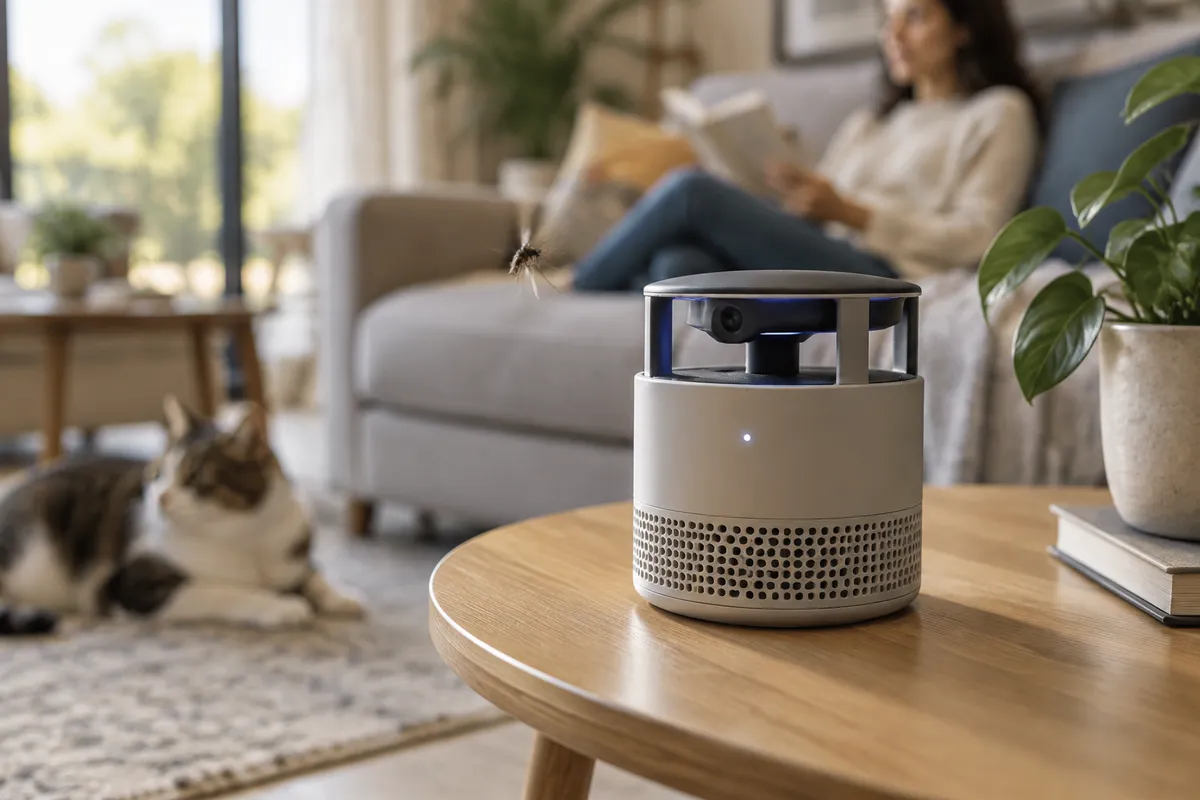
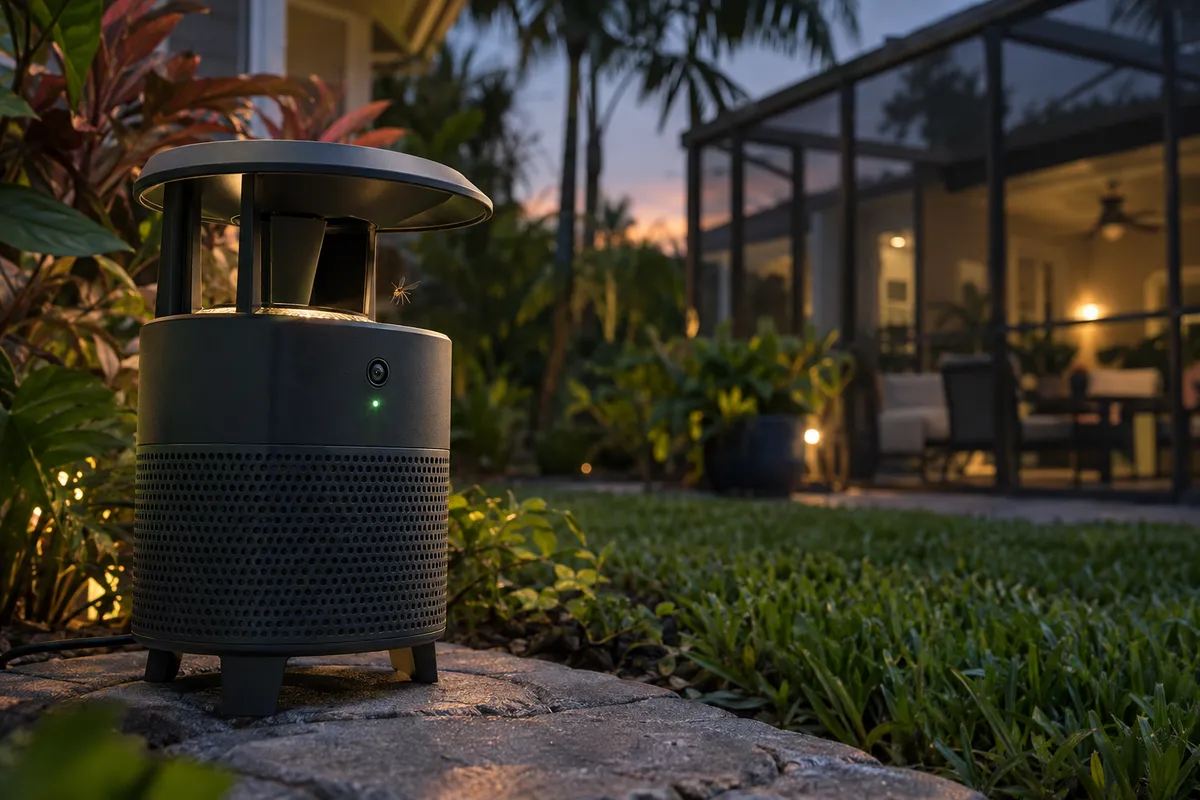
Florida is dealing with its largest dengue outbreak in decades, with 524 locally acquired cases, according to Fox News. Meanwhile, researchers at the University of South Florida (USF) have built an AI-powered mosquito trap that can identify disease-carrying species with more than 98% accuracy in lab testing. This article explains why that matters, what the technology could change, and what you can do around your own home in the meantime.
Why a smarter trap matters
Per Fox News, the idea behind the USF trap is speed. Public health teams respond to mosquito-borne disease best when they know which species are present, and where, before people get sick. The faster a trap can tell a dangerous mosquito from a harmless one, the sooner a team can act.
That 98% figure comes from lab conditions. Fox News does not report field results, so how the trap performs in real backyards, drainage ditches, and neighborhoods is still an open question. Treat the number as promising, not proven in the wild.
How AI fits into mosquito tracking
The source article doesn't detail the trap's internal workings, so here is the general idea, flagged as my own explanation: AI identification tools learn to recognize patterns, and a trap that can classify what it catches can flag species of concern without waiting for a person to examine each sample.
What the reporting does say is the goal. Faster detection could help public health teams respond before outbreaks spread further. Think of it as an early warning system: the sooner a signal appears, the more options officials have.
Why dengue is a local concern now
Dengue is often thought of as a tropical travel risk. The Florida numbers challenge that. The 524 cases are local, meaning the outbreak is being driven by transmission in the state itself.
Fox News also notes that mosquitoes remain active well into November in warmer regions. Climate, travel, and urban conditions can all extend mosquito risk, the article argues. That is why surveillance tools, not just seasonal spraying, are getting attention.
What you can do at home
The source doesn't provide a household checklist, so these are widely used, general mosquito-control habits rather than claims from the USF research. Check local health department guidance for specifics in your area.
Step 1: Dump standing water
Walk your yard once a week. Look at flowerpot saucers, buckets, birdbaths, clogged gutters, and tarps. Empty or scrub anything holding water.
Step 2: Protect your doorways and windows
Check screens for tears and gaps. Fix them so mosquitoes stay outside.
Step 3: Use repellent when outdoors
Choose a repellent registered with the EPA and follow the label directions.
Step 4: Watch for symptoms
If you live in an affected area and develop a fever after mosquito bites, contact a healthcare provider rather than guessing.
Set up a simple reminder
A small tech habit helps here. On an iPhone (Reminders app) or an Android phone (Google Calendar or Google Tasks), create a repeating weekly reminder called "Dump standing water." Set it for the same day each week, such as Saturday morning. Any current version of these apps supports repeating reminders: choose the repeat option when you create the entry. It takes under a minute and turns a good intention into a routine.
What to watch next
The open questions are practical ones. Will the USF trap hold its accuracy outside the lab? Will health departments adopt it? Fox News frames AI surveillance as a potentially crucial public health tool, but that is a forecast, not a result yet.
For now, the most effective step is the least high-tech: set that weekly reminder and tip out every container in your yard that holds water.