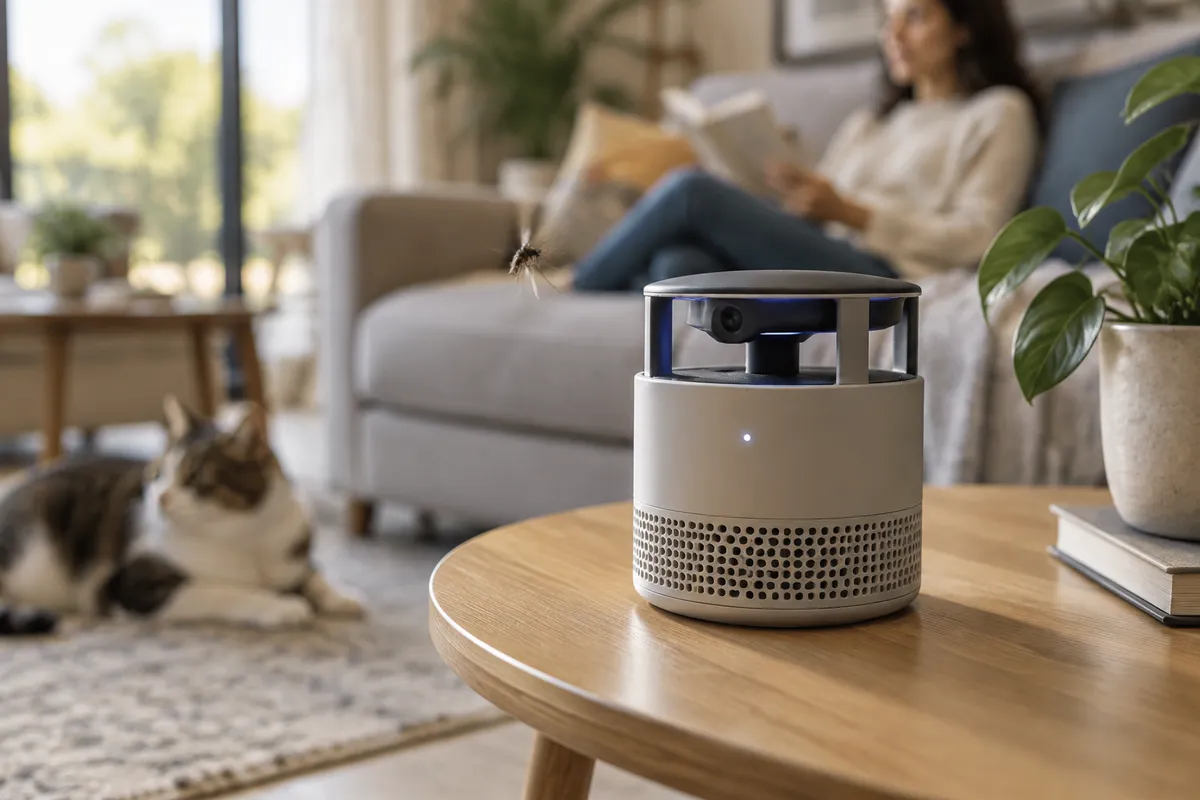
A Chinese start-up says it has pointed self-driving car technology at one of the smallest targets imaginable: the mosquito. According to The New York Times, the company uses sensors developed for autonomous vehicles to track tiny flying insects and destroy them, while avoiding people, pets and reflective surfaces. If that works as described, it could change how you think about keeping bugs out of your yard and bedroom.
This article explains what is actually known, why the approach is different from the zappers and sprays you can buy now, and what you can do today while the technology matures.
What the start-up claims
Here is the extent of what has been reported. Per the Times, the company adapted sensors originally built for self-driving cars. It claims the system can detect and follow mosquitoes in flight and eliminate them, and that it is built to steer clear of people, pets and reflective surfaces.
That is the full set of claims we can pass along. Details such as price, range, power use, availability, and independent test results were not part of what was reported, so treat any specific numbers you see elsewhere with caution until they are verified.
Why self-driving sensors make sense for this job
A car's sensors are built to pick out moving objects, judge where they are going, and react fast. A mosquito is a very small, very quick object, but the underlying problem is similar: detect, track, decide, act.
The interesting part is the "avoid" list. Telling a mosquito from a hand, a cat or a shiny window is the hard part of any device that does something to the things it targets. Reflective surfaces are called out specifically, which suggests they can confuse detection. That is our reading, not a claim from the report.
How this differs from what you use now
Most home mosquito control falls into a few familiar groups:
- Sprays and repellents: chemical, and you apply them to skin, clothing or surfaces.
- Nets and screens: passive barriers that only work where they are installed.
- Traps and bug zappers: they attract insects and wait for them to arrive.
An automated tracker flips that logic. Instead of luring or blocking, it actively hunts. The Times frames this as mosquito control shifting from chemicals and nets toward automated, AI-driven targeting. Whether it can replace the older tools is an open question, and nothing reported so far shows it can.
Why the timing makes sense
Mosquito-borne illness is a real motivator. As climate change expands mosquito habitats and disease risks, governments and consumers are looking for less toxic options. That is the context for why a start-up would try this, and it is why the idea may keep drawing attention even if the first products are limited.
What to do right now
You cannot buy this technology based on what has been reported, so the practical advice is still low-tech. These steps work on any phone-and-gadget-free budget:
1. Remove standing water weekly
Empty plant saucers, buckets, clogged gutters and pet bowls you are not using. Mosquitoes breed in still water.
2. Check your screens
Look for gaps around window frames and door edges. A small tear is an open door for a mosquito.
3. Use a fan outdoors
Mosquitoes are weak fliers, so a fan on a patio makes it harder for them to reach you. This is general household advice, not something from the report.
4. Follow your local health guidance
If your area has mosquito-borne disease, your public health office is the best source for repellent and protection advice.
Questions to ask before buying any AI pest device
When products like this reach shops, a few questions will separate a useful device from a gimmick:
- Has anyone tested it independently? A company's own claims are a starting point, not proof.
- How does it handle people and pets? Ask exactly what it does when a child, a dog or a mirror enters its field of view.
- What does it destroy with? Know the mechanism before you put it near your family.
- Does it work outdoors, indoors, or both? Sunlight, rain and clutter change what a sensor sees.
- What does it cost to run? Power and maintenance matter for a device that runs all night.
The Times described the system's avoidance abilities as the company's claim, and that is the right way to hold them for now.
Breakthrough, gimmick or preview?
It is too early to say. The idea is clever and the reasoning behind it holds together: proven sensing technology applied to a stubborn everyday problem. But a claim is not a product, and a product is not a proven one. For smart-home shoppers, this is a development to watch rather than a purchase to plan.
Your best move today: drain the standing water around your home this weekend, and bookmark the question list above for when AI bug hunters show up on store shelves.