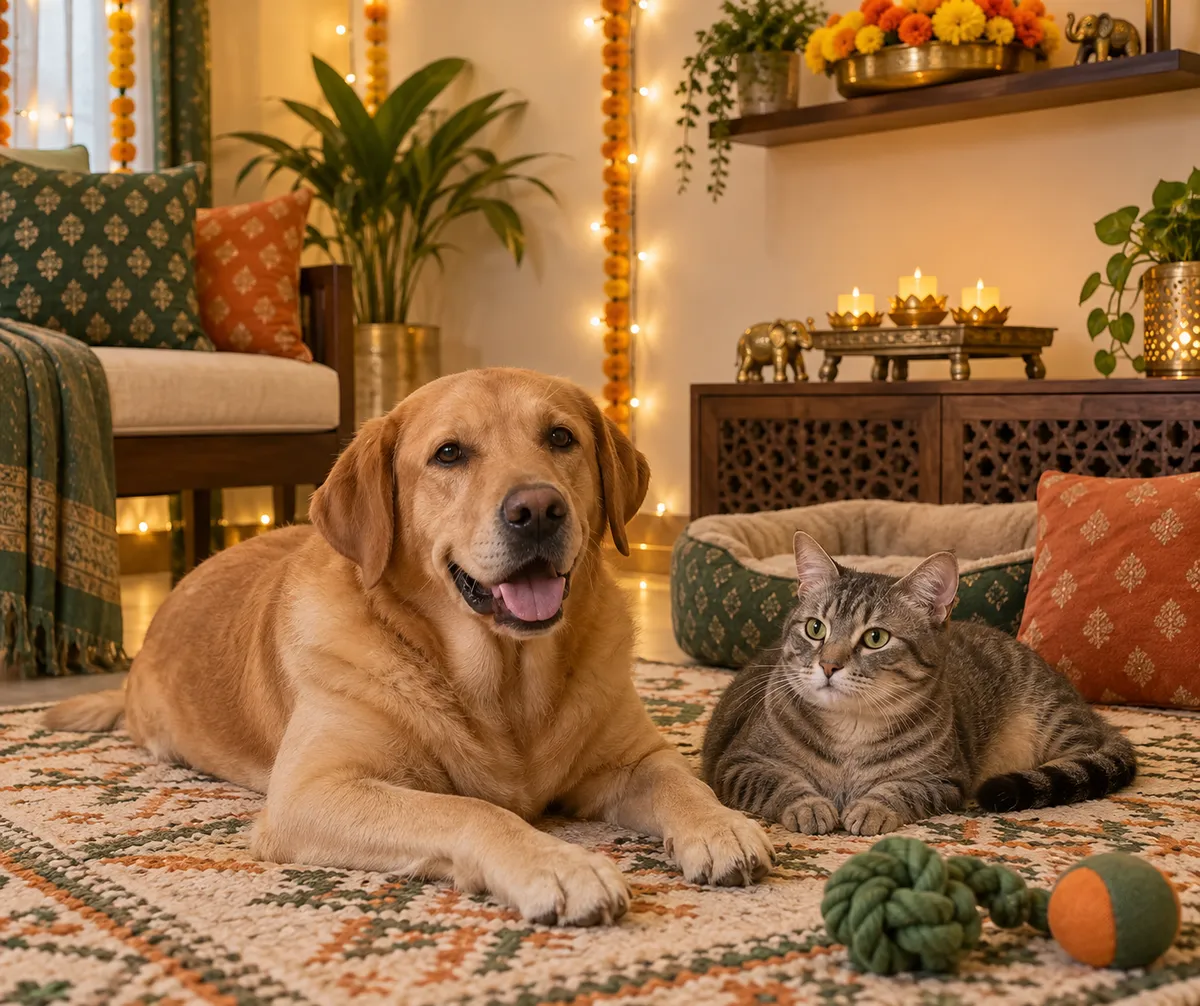
You can keep your home sparkling for the festive season and still keep your dog or cat out of the emergency vet's waiting room. You don't need to give up decorating. You need to decorate with a curious nose and a set of paws in mind.
That's the core message of a recent Pet First feature reported by Abplive, which shares six veterinarian-recommended tips covering electrical wires, flames, flowers, rangoli powders and fragile ornaments. Festive weeks bring extra lights, diyas, flowers, guests, noise and floor décor into the home, and each one can create a hidden risk for a pet. Here is how to handle each, in the order you'll probably meet them.
1. Secure Electrical Wires and Lights
Decorative string lights are one of the first things to go up, and they're easy for a pet to reach. Dangling cords look like toys, and chewing on them is a hazard.
A practical approach, using the tip as the starting point:
- Walk through each room at pet height and look for loose cable ends and low-hanging strands.
- Keep wires tight against walls or up high, away from where your pet walks, plays or sleeps.
- Tuck any extra cord out of reach rather than leaving it coiled on the floor.
If your pet already chews cords, treat that room's lighting as a no-go zone until the season ends, or hang lights where they simply can't be reached.
2. Choose Sturdier, Pet-Safe Décor
Fragile ornaments are the second big risk. A wagging tail or a cat's leap can bring down glass or brittle pieces, and broken fragments are dangerous for paws and mouths.
Swap in sturdier pieces, especially on low shelves, tables and the floor. Save delicate items for high spots your pet can't get to. This is the cheapest fix on the list: you're mostly just moving things.
3. Keep Diyas and Candles Out of Reach
Open flames and curious pets don't mix. A cat sniffing a diya or a dog's swinging tail can mean burns or a knocked-over flame.
Place diyas and candles high, on stable surfaces, well away from where pets walk. Never leave them lit with a pet loose and unsupervised. If you want the glow without the worry, consider a vet-approved swap such as flameless alternatives, a pairing the source's angles also point toward.
4. Be Careful With Flowers and Garlands
Flowers and garlands feel harmless, but some are toxic to cats and dogs, and pets tend to chew whatever hangs low or sits on the floor.
Before you hang or arrange anything:
- Check whether each flower type is safe for dogs and cats. If you're unsure, ask your vet.
- Hang garlands high, not along doorways or low railings.
- Pick up fallen petals and strands promptly.
When in doubt, leave the questionable flowers out of any space your pet can enter.
5. Prevent Access to Rangoli Powders and Glitter
Rangoli is floor décor, which puts it right where pets live. Coloured powders and glitter can be licked, sniffed or walked through and carried onto fur and paws.
Make your rangoli in an area your pet can't enter, such as behind a closed door or a pet gate, and keep the powders and glitter stored out of reach. If you need a pet-friendlier look, consider swapping materials, one of the vet-approved changes the feature highlights. Ask your vet which alternatives suit your animal.
6. Create a Designated Pet-Friendly Space
Guests, noise and unfamiliar decorations can overwhelm animals, especially anxious ones. A calm corner gives your pet somewhere to retreat.
Set up a quiet area away from the busiest rooms and the décor, with the things your pet already knows:
- Their bed or blanket
- Water
- A favourite toy
Keep that space free of lights, flames, flowers and powders. Tell guests it's the pet's zone and shouldn't be disturbed.
A Quick Pet-Height Walkthrough
Before guests arrive, get down on your knees and look around each room. Check for:
- Cords or strands within reach
- Breakable items on low surfaces
- Flames at nose or tail level
- Flowers or petals on the floor
- Powders or glitter within sniffing distance
Five minutes of this catches most of what the six tips cover.
Decorate First, Then Check at Paw Level
Finish your decorating, then crouch to your pet's height and fix whatever you can reach. If you think your pet has chewed or eaten something unsafe, call your vet right away rather than waiting to see what happens.