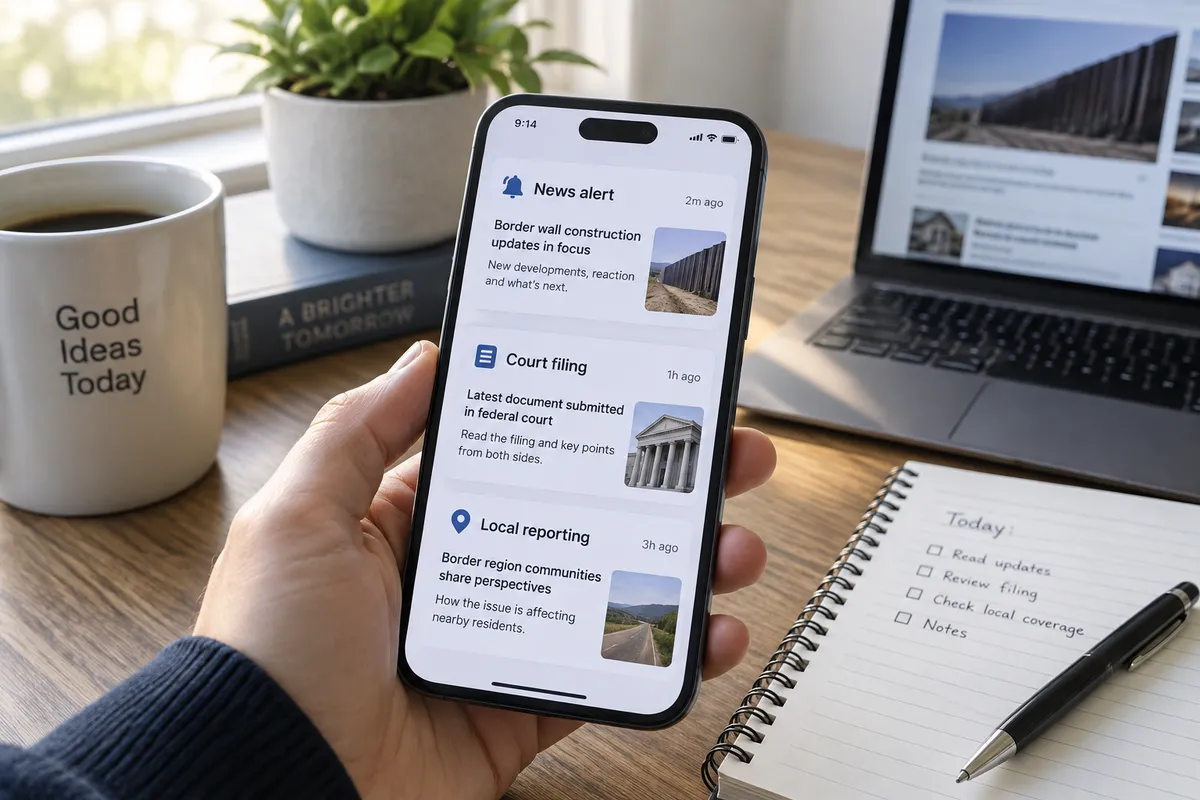
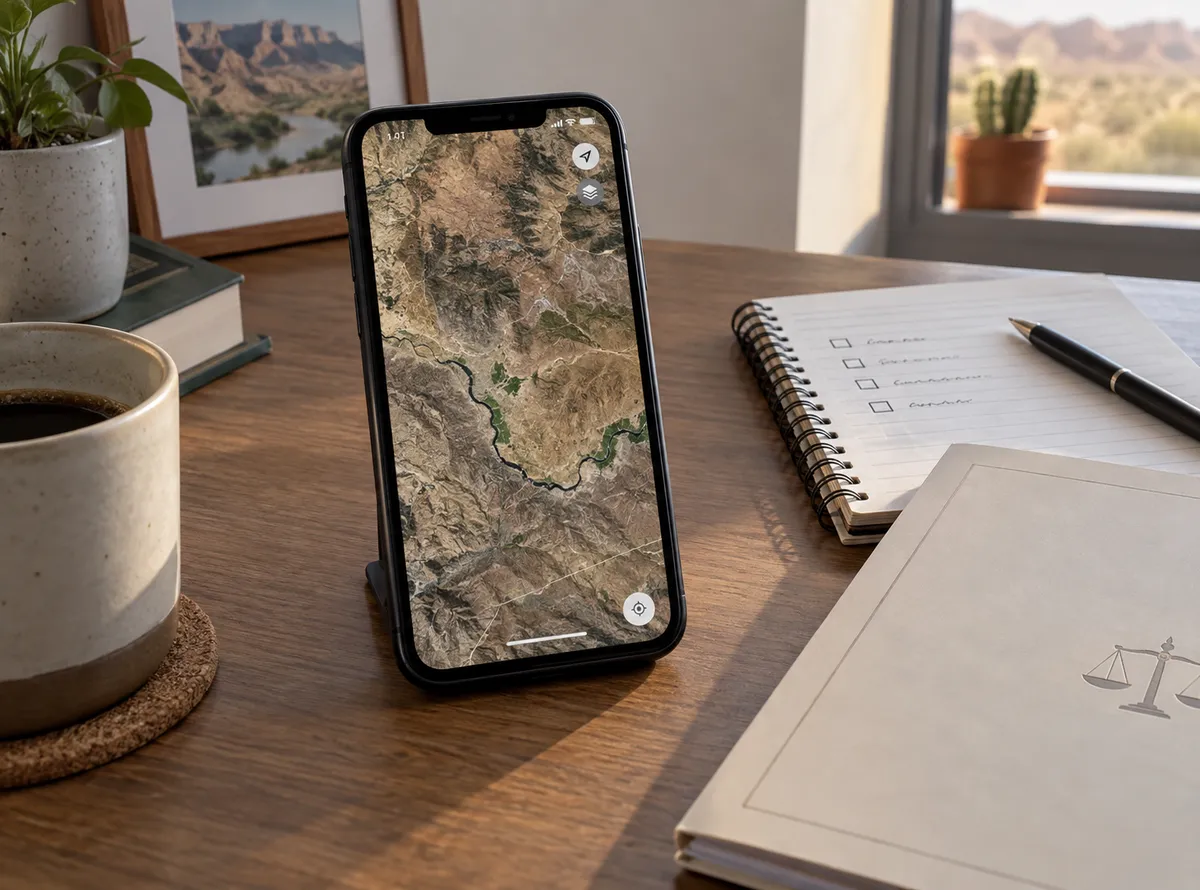
A court-ordered pause, a $46 billion price tag and a remote stretch of Texas make the Big Bend border wall fight hard to follow. Headlines move fast, and each side has its own numbers. This guide gives you a simple setup on your phone or computer to track the story and check claims as they arrive. It also covers what the reporting says so far.
What the reporting says
In an exclusive interview, the Associated Press spoke with Customs and Border Protection Commissioner Rodney Scott. Per the AP, Scott is defending the Trump administration's plans for a wall and related infrastructure in Texas' Big Bend region. The AP describes the overall plan as costing $46 billion, and Scott argues for the entire project despite lawsuits, local opposition and a court-ordered pause.
The AP also frames Big Bend as a test of how far the administration will push its border-wall agenda in environmentally sensitive areas with low numbers of crossings. The administration claims it is ahead of schedule on a large border buildout and is asking the Supreme Court to lift limits on construction, per the AP's reporting.
That is the confirmed ground. Anything beyond it, such as how the court case will end, is not yet known.
Step 1: Set up alerts that cut through repetition
You want updates on the legal fight, not fifty rewrites of one story.
- Open Google Alerts in any browser at google.com/alerts (free, works on any device).
- Create an alert for "Big Bend border wall".
- Create a second for "Supreme Court border wall construction".
- Set frequency to "At most once a day" and sources to "News".
Two narrow alerts beat one broad one. The first catches local and environmental coverage. The second catches the legal turns.
Step 2: Separate claims from facts
When you read any article on this topic, copy the key claims into a notes app (Apple Notes, Google Keep or any basic notes tool) under three headings:
- Who said it: Scott, a landowner, a conservation group, a court filing.
- What kind of claim it is: a number, a prediction, a legal ruling or an opinion.
- Where it can be checked: a court docket, an agency release or a direct interview.
For example, "ahead of schedule" is the administration's claim, as reported by the AP. A court pause is a legal event you can verify in filings. Keeping those apart stops a talking point from sounding like settled fact.
Step 3: Learn the questions the coverage raises
The AP's framing points to several tensions worth watching. Treat them as questions to test against each new story, not as conclusions.
Security versus low crossings
Big Bend is described as a low-crossing area. Ask whether new articles offer crossing data for the region and who supplied it. Scott's case for the whole project is one side. Critics' cost and environmental arguments are the other.
What a court pause actually does
A pause limits construction while the legal case proceeds. It is not a final ruling. The administration's request that the Supreme Court lift limits is the next thing to watch, so the second alert above matters most.
Environment and cost
The region is environmentally sensitive, and the price is $46 billion across the plan. When you see a new figure, check whether it covers Big Bend alone or the full buildout. The AP ties the $46 billion to the entire plan.
Drones and the wider debate
The AP's reporting also touches on broader scrutiny of CBP tactics and cartel drone activity. Keep these as separate threads. A drone incident does not by itself settle whether a wall in Big Bend makes sense, and good coverage will say so.
Step 4: Go to primary sources
Secondhand summaries drift. Once a week, spend ten minutes on the originals:
- Search the CBP newsroom for statements from the agency.
- Search the court's public docket for the case name once you find it in news coverage.
- Read the AP's original interview rather than a reposted version, so you see Scott's full wording.
On a phone, bookmark these three pages in a folder named "Border wall" so the check takes seconds.
Step 5: Spot a weak article fast
Run every new story through this quick test:
- Does it name who made each claim?
- Does it say whether a number covers Big Bend or the full project?
- Does it distinguish a pause from a final decision?
- Does it include more than one side?
If an article fails two of four, treat it as commentary, not reporting.
The one habit that matters
Before you share anything about Big Bend, find the sentence that says who is making the claim, and share that attribution along with it.