You probably make knapsack decisions every week without calling them that. You have a limited budget, limited time, or limited space, and a long list of things competing for it. A recent research project shows how a tower defense game can make that kind of decision-making easy to see, and gives you a simple way to think through your own limits.
What the researchers did
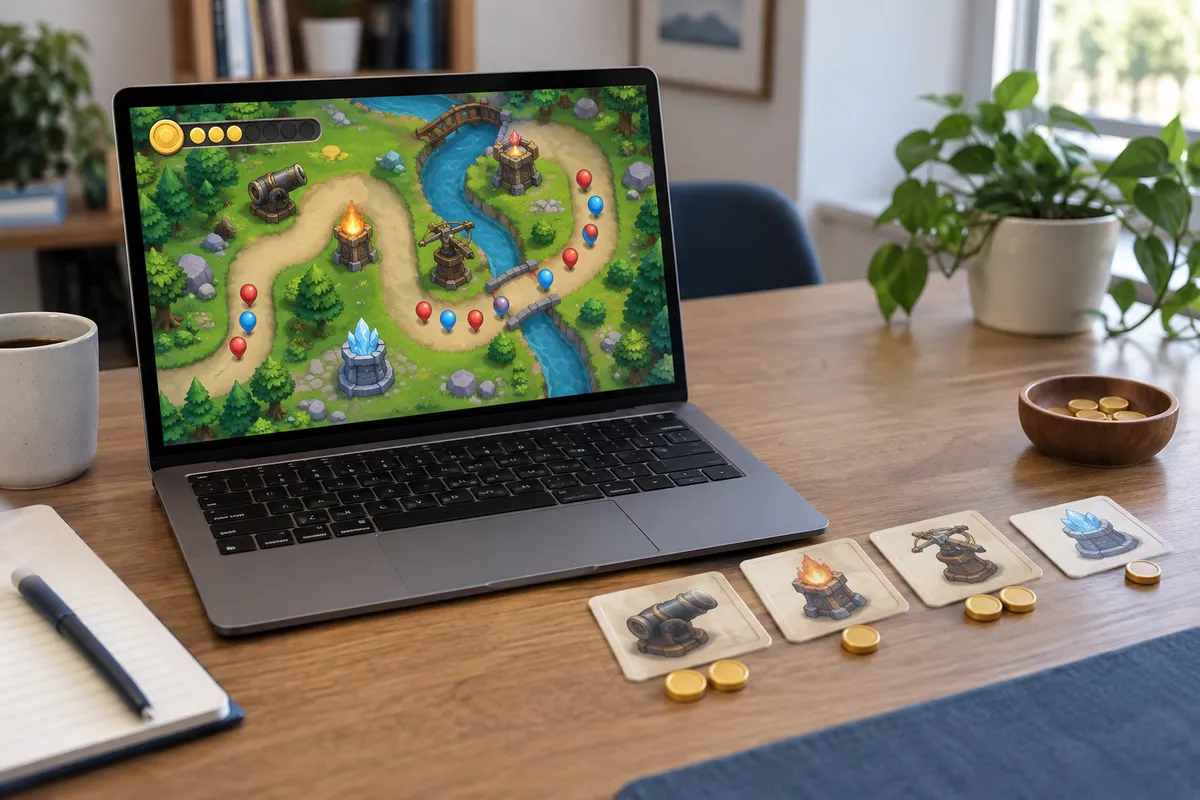
According to a report from Phys, a researcher used the tower defense game "Bloons TD" to demonstrate how mathematical optimization can solve real-world resource allocation problems. The game was modeled as a knapsack problem. The resulting strategies beat the game and, per the report, sometimes outperformed human players.
The summary I have doesn't include the specific game version, the exact method, or the numbers behind those results, so I won't guess at them. The core idea is still clear and useful.
The knapsack problem in plain language
Imagine packing a backpack that can only hold so much. Every item has a value to you and takes up some room. Your goal is to pick the combination that gives you the most total value without going over the limit.
In a tower defense game, the backpack is your money. Each tower costs something and offers some defensive value. You can't buy everything, so the question becomes: which mix of towers gives the strongest defense for the cash you have?
That is the same structure as many real decisions. The pieces change, but the shape stays the same:
- A fixed limit (money, time, space, staff)
- A list of options, each with a cost
- A way to judge the value of each option
- A goal: the most value within the limit
Where this math shows up outside games
Phys's coverage frames the research as relevant to organizations facing complex resource constraints, such as facility placement and security deployment. The editorial framing also points to examples like airport security and disaster response. In each, someone has a limited supply of something and many places or needs to spend it on.
The game works as a teaching tool because the stakes are low and the feedback is fast. You can see right away whether your choices held up.
Try it yourself: a five-step version
You don't need special software to borrow the thinking. Try it on a monthly budget, a weekend to-do list, or the storage on your phone.
Step 1: Name your limit
Write down the one number you can't exceed. For a phone, it might be free storage in gigabytes. For a project, it might be ten hours.
Step 2: List every option with its cost
Put each candidate in a notes app or spreadsheet, with its cost next to it. For storage, that could be app sizes. For a to-do list, estimated minutes.
Step 3: Score the value
Give each option a value from 1 to 10. It's subjective, and that's fine. What matters is being consistent.
Step 4: Compare value per cost
Divide value by cost for each item. High-scoring items go to the top. This is a quick rule of thumb, not a guaranteed best answer. Knapsack problems can be tricky, and a cheap high-ratio item can crowd out a better combination.
Step 5: Fill the limit, then test swaps
Add items from the top until you run out of room. Then try swapping one big item for two smaller ones, or the reverse, and see if the total value rises. That swap-testing is a small version of what an optimization method does more systematically.
Why a computer can beat a person here
With a handful of options, you can reason it out yourself. With dozens or hundreds, the number of possible combinations explodes, and human intuition tends to miss good ones. That is the kind of situation where, per the report, an algorithmic approach sometimes outperformed human players. It's reasonable to read that as a sign these methods earn their keep when choices pile up, though the details of the study would be needed to say more.
Games as practice for decision-making
If you play strategy games, you're already practicing this. Next time you're deciding what to buy, build, or upgrade, notice the pattern: limit, options, costs, value. Naming it makes the decision less overwhelming.
Your next move
Pick one limited resource you're juggling this week, and run the five steps above on it for ten minutes. You'll likely spot a better combination than the one your gut would have chosen.