
If you have ever lost your home Wi-Fi in the middle of a video call, you know how much a single connection can matter. Now picture that connection running drone operations and military communications. That is the position Ukraine is in with Starlink, and this explainer covers why the dependence runs so deep, why Europe can't simply swap in another service, and what it teaches the rest of us about relying on one provider.
The topic comes from a BBC report on Ukraine's reliance on SpaceX's network. I'm working only from that reporting's main points, so where details are thin, I'll say so.
What happened
Per the BBC, a recent Starlink slowdown exposed how vulnerable Ukraine is when a critical military capability is controlled by outside political and commercial actors. The BBC's description of the story is blunt: Ukraine needs another satellite internet service, but a decent alternative to Elon Musk's network doesn't exist yet.
Why Ukraine depends on Starlink
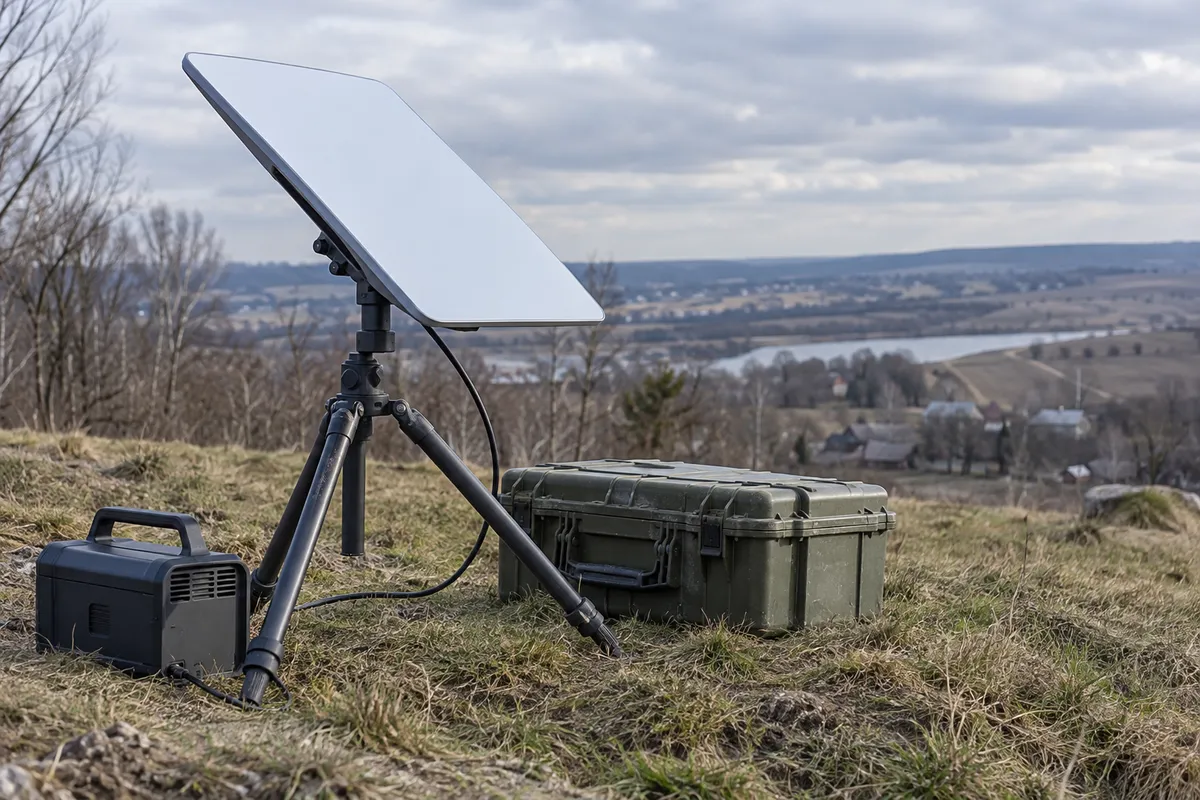
According to the BBC, Ukraine uses SpaceX's Starlink and Starshield for battlefield communications, drone warfare and wider defense operations. In plain terms, these services keep units connected when other infrastructure is damaged or unavailable.
The BBC points to four qualities that make Starlink hard to match:
- Speed: enough bandwidth for demanding tasks such as drone operations.
- Scale: a large network already in place and working.
- Portability: equipment that can be moved and set up in the field.
- Military usefulness: it already does the job Ukraine needs.
That combination is the real story. Any one of those traits can be found elsewhere. Having all four, today, is what makes Starlink so embedded.
Why Europe can't plug the gap quickly
The BBC reports that Europe has alternatives in development, but none can fully replace Starlink's speed, scale, portability or military usefulness yet. The key word is "yet." Building a satellite network is not a software update. It takes years of design, launches and testing before it behaves like a dependable service.
Iris² and sovereign space infrastructure
Iris² is Europe's push for space-based strategic independence, and it is one of the angles the BBC coverage highlights. The broader context is that Europe is reassessing its defense autonomy, which has turned satellite connectivity into a frontline security issue. I don't have launch dates or performance figures for Iris² from the reporting, so I won't guess at them. The takeaway is direction, not timeline: Europe wants its own system, and it isn't ready to carry this load today.
The risk of one provider
The uncomfortable lesson is about control. When a network is owned by a private company, decisions about its availability sit outside the government that depends on it. The Starlink slowdown, as the BBC describes it, showed what that exposure looks like in practice.
This is analysis rather than reporting, but the pattern is familiar to anyone who has built their work around one tool. The more essential a service becomes, the more painful it is when it slows, changes terms or disappears.
What everyday users can take from this
You are not running a war, but the same principle scales down to your own devices. A few practical habits reduce your exposure to a single point of failure:
- Keep a backup connection. Know how to use your phone's hotspot feature (found in your phone's Settings under mobile or cellular network sharing) if your home internet drops.
- Store important files in two places. For example, one cloud service plus one external drive.
- Avoid tying everything to one account. Keep recovery options and key contacts available offline.
- Test your fallback before you need it. A backup you have never tried is a guess.
Ukraine's situation is far more serious, but the logic matches: redundancy is cheap compared with being stuck.
What to watch next
The open question is whether Europe's projects can reach Starlink's level of speed, scale and portability before another disruption forces the issue. Based on the BBC's reporting, no alternative does so right now. Until one does, Ukraine's communications stay tied to a network it does not control.
The practical lesson for you: find the one service your daily life depends on, and set up a backup for it this week.